(1).png)
.png)
In an era where energy self-sufficiency is becoming more than acatchphrase, many homeowners are turning to battery storage as a viablesolution. This isn't just about joining the green revolution; it’s a smarteconomic move too - in many cases having a shorter payback period than solar.In this article, we’ll delve into why installing a battery at home could be oneof your best financial decisions, how it interacts with dynamic energy tariffs,and its role in enhancing solar self-sufficiency.
First, themost commonly understood use case: using a battery to supplement your solar.
As coveredin our solararticle, PV can be afantastic way of reducing your bills and reliance on the grid, but let's behonest, the sun doesn't always shine on your schedule. So, what happens to thesolar energy you generate during the day when you're at work or just not usingas much power as you’re generating? It often gets exported back to the grid,with you receiving a payment or credit against your energy consumption. Thething is, this payment is generally far less per kWh than the price you paywhen you’re buying the power.Batteries change this game completely.
By storingyour excess solar power, you become less reliant on the grid and boost yourself-sufficiency. You’re also able to consume as much of that super-cheap solarpower as possible, lowering your average cost of power. Imagine powering yourhome with sunshine even after sundown!
The ChangingLandscape of Wholesale Energy Pricing:
While most consumers pay afixed price for energy, it’s a whole other world on the wholesale market, wherea different price every 30 mins allows for a more accurate reflection of thesupply - demand balance. In recentyears, the advent of renewable energy is reshaping the dynamics of wholesaleelectricity pricing. As the percentage of renewable energy sources like solarand wind become more prevalent on the grid, they are creating new patterns inenergy pricing. Unlike traditional energy sources, renewables are intermittent– the sun doesn’t always shine, and the wind doesn’t always blow. Thisvariability leads to dramatic shifts in supply, causing wholesale prices tofluctuate more than they did in the past.
At times when it’s very windy or sunny, you can even have instances ofnegative power. These have become more common in Europe over the last fewyears.
Traditionally, consumers have been insulated from such fluctuations,paying fixed prices that change very slowly, perhaps every 6 months, to reflectwhat’s happening at the wholesale level.
But things are changing.
Across the globe, we arenow witnessing the emergence of dynamic tariffs, which offer a more flexibleapproach to energy pricing. These tariffs are designed to reflect the real-timechanges in the wholesale market, thereby allowing consumers exposure to what’shappening at the wholesale level. This can be good and bad - when power ischeap or negative there is a huge incentive to consume, while high pricedperiods (evening peaks) will typically see prices slightly higher than those ona fixed contract.
Consumers with theflexibility to adjust their behavior or consumption can really benefit fromthis. For example, if most of your electricity spend is power for your EV, andyou can control when you’re charging to ensure you’re predominantly consumingat cheaper periods, then you’ll end up running your vehicle for less.
However, batteries allowyou to take this to the next level.
Think of a battery as apotential 'piggy bank' for cheap electricity. When the sun is shining or windis blowing and prices plummet, your battery can charge up off this cheap gridpower (assuming you’re on a dynamic tariff). Then, during peak price periods,instead of drawing expensive electricity from the grid, you can use the energy stored in your battery.
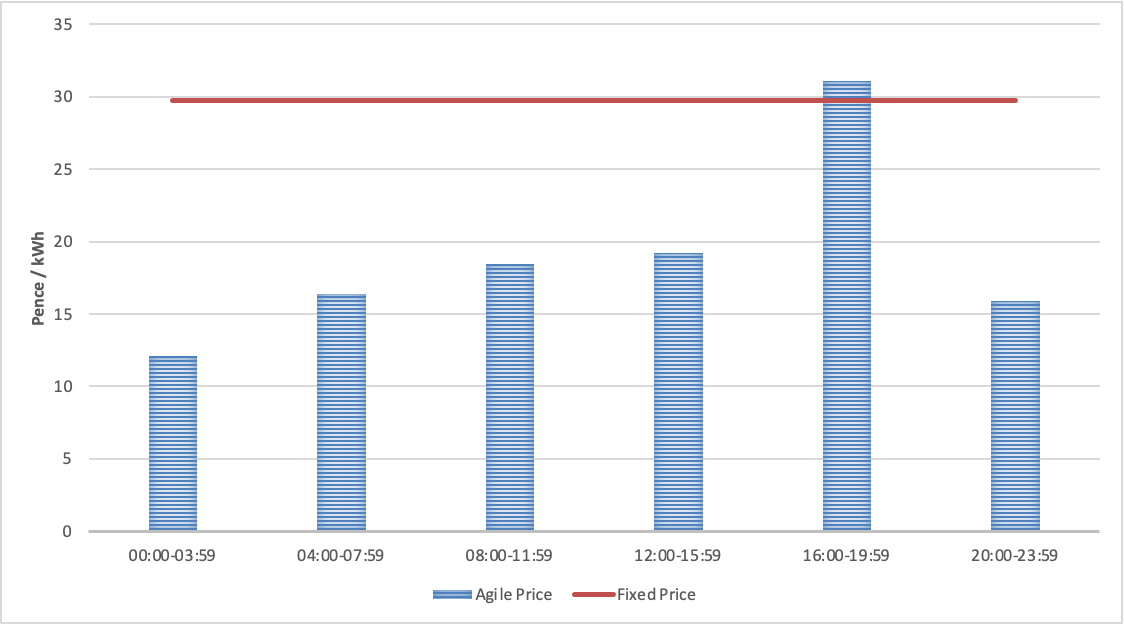
As evidentfrom the above graph, energy pricing can swing wildly within the same day,often more than doubling between the lowest and highest periods. With abattery, you can have the best of both worlds - filling up when power is cheapand earning the luxury to say ‘no thanks’ to the grid when it is at its mostexpensive (and usually dirtiest) during the evening peak.
So, is abattery right for you?
Ultimately,the decision depends on your individual circumstances, energy needs, andbudget. However, with the rising popularity of dynamic tariffs, increasingsolar penetration, and growing government support (no VAT is payable on batteryinstallations!) batteries are becoming more accessible and financiallyattractive than ever.
In NeuraEnergy’s sustainability suite, you can see for yourself what a battery would doto your utility bill and self sufficiency score. We do this by overlaying animaginary battery onto your energy consumption profile, and using our NeuraFlexalgorithm to figure out how it would likely behave (when it wouldcharge/discharge). With these results, we can then compare your hypotheticalenergy costs in the battery-aided scenario to your actual costs today, and giveyou an accurate idea of how much you’d save by getting a battery.
Curious?Try it for yourself!
.png)
(1).png)


